Pricing statistics for HVAC and home service shops come from very different places. The government tracks prices and inflation. Trade groups and software firms survey their own members. Lenders and survey firms ask homeowners what they will pay. This page keeps each number tied to the group that produced it, with a date and a link, so you can see what each one does and does not cover.
The short version for 2026 is that costs are up, most shops raised prices, and customers are comparing. Equipment makers keep announcing increases. Small firms say they cannot pass on every dollar. Homeowners still spend, but they delay, shop around and want to see the price before they say yes. How you build and present a quote now matters as much as the number on it.
We found no published count of how many shops use flat rate versus time and materials, so this page does not guess one. It uses the nearest hard data instead: profit by method, how many options a quote shows, close rates and what customers say about price. We update it every month. Every figure comes from the source named next to it, and we dropped any figure we could not trace back to its origin.
Key Takeaways
- A net 31% of small business owners raised average selling prices in September 2026, more than double the historical average of 14% (NFIB, Sep 2026).
- 83% of HVAC businesses raised prices in the past year, the most of any trade Jobber compared (Jobber, Feb 2026).
- HVAC contractors who use flat rate for service calls report 7% average net profit, against 4% for those using other methods (ACCA, Dec 2025).
- 68% of homeowners get more quotes when a price comes in higher than expected (Housecall Pro, May 2026).
- 73% of customers say clear, upfront pricing is the primary reason they pick a contractor (ACHR News, Apr 2026).
- Only 10% of HVAC contractors show customers four or more options on a proposal (ACHR News, Feb 2026).
- HVAC contractors who offer financing close 49% of sales on average, against 38% for those who do not (ACHR News, Feb 2026).
- 69% of home service pros win more than half of the quotes they send (Jobber, Feb 2026).
- 72% of homeowners say they would pay more to have an emergency fixed within 24 hours (Housecall Pro, May 2026).
- Only 16% of services firms in the Kansas City Fed district passed on 80% or more of their cost increases in February 2025, down from 27% in February 2022 (Federal Reserve Bank of Kansas City, Aug 2025).
- Consumer prices rose 3.7% in the 12 months to September 2026 (Bureau of Labor Statistics, Oct 2026).
- 7 in 10 homeowners lack enough savings set aside for repairs (Synchrony, Mar 2026).
- 21% of HVAC customers name costs higher than expected, or surprise fees, as their biggest frustration (FIELDBOSS, Jul 2025).
How many contractors raised prices?
Most of them did. Larger, established shops raised prices most often, and small and new shops raised them least.
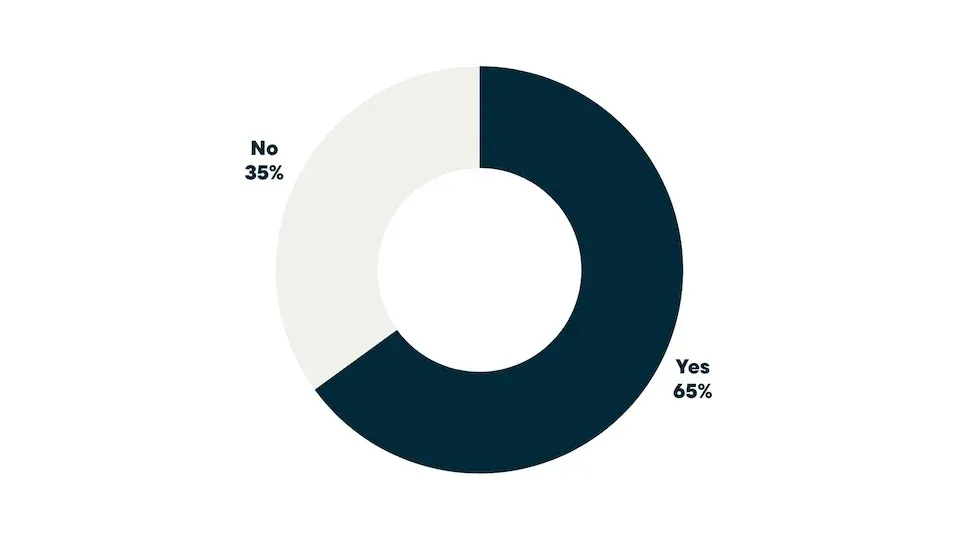 Figure 1: Nearly two in three home service owners raised prices in the past year, and the rest held steady while costs rose. Source: Jobber, 2026 Home Service Trends Report, Feb 2026. Chart published by the source, captured 20 Oct 2026.
Who raised prices in the past year?
Size and age of the business line up with who raised prices.
- 65% of home service businesses raised their prices in the past year (Jobber, Feb 2026).
- 80% of businesses earning $500,000 or more raised prices, and so did 78% of established businesses (Jobber, Feb 2026).
- Only 54% of businesses under $100,000 raised prices, and only 42% of new businesses did (Jobber, Feb 2026).
- 74% of roofing businesses raised prices, while only 55% of cleaning businesses did (Jobber, Feb 2026).
- Nearly 28% of owners under 30 say pricing and margins are their biggest blocker to growth (Jobber, Feb 2026).
What price rises do residential contractors plan?
Half expect a rise in the 2% to 10% range, and a little over a quarter plan to hold.
- 27% of residential contractors expect to raise service prices by 6% to 10% in 2026 (ACHR News, Apr 2026).
- 23% expect increases of 2% to 3% (ACHR News, Apr 2026).
- 28% say they will keep prices the same (ACHR News, Apr 2026).
What do small business surveys show about price changes?
The NFIB monthly survey is the longest running read on small firm pricing, and it remains above its historical average.
- Unadjusted, 38% of owners reported higher average selling prices in September and 8% reported lower ones (NFIB, Sep 2026).
- A net 31% plan to raise prices over the next three months, against a historical average of net 22% (NFIB, Sep 2026).
- 20% of owners named inflation as their single most important problem, against a historical average of 7% (NFIB, Sep 2026).
- Among owners reporting lower profits, 24% cited rising material costs and 8% cited a price change for their product or service (NFIB, Sep 2026).
- Among owners reporting higher profits, 63% credited sales volume and only 4% credited a price change (NFIB, Sep 2026).
- 16% of owners named inflation as their top problem in August, tied with taxes for second place (NFIB, Aug 2026).
Did higher prices show up on invoices?
Yes, but unevenly. Fewer jobs booked in the spring, and bigger invoices made up some of the gap.
- Inflation hit 4.2% in May 2026, the highest since 2023, before easing to 3.5% in June (Jobber, Aug 2026).
- Average invoice size in the contracting segment fell 3.5% year over year in April and rose 2.6% in June (Jobber, Aug 2026).
- Contracting revenue jumped 6.4% in June as urgent repair jobs picked up (Jobber, Aug 2026).
- Average invoice size in the green segment climbed from 3.5% growth in April to 8.4% by June (Jobber, Aug 2026).
- Average invoice size in the cleaning segment climbed from 3.4% growth in April to 5.8% in June (Jobber, Aug 2026).
- Average invoice size in the contracting segment rose only 1% year over year in the fourth quarter of 2025 (Jobber, Feb 2026).
- More than one in four homeowners were speeding up projects to get ahead of future price increases (Angi, Aug 2026).
What is pushing contractor prices up?
Costs are the main driver, and they come from three directions at once: labor, equipment and parts, and general inflation. Demand and margin rank far below costs.
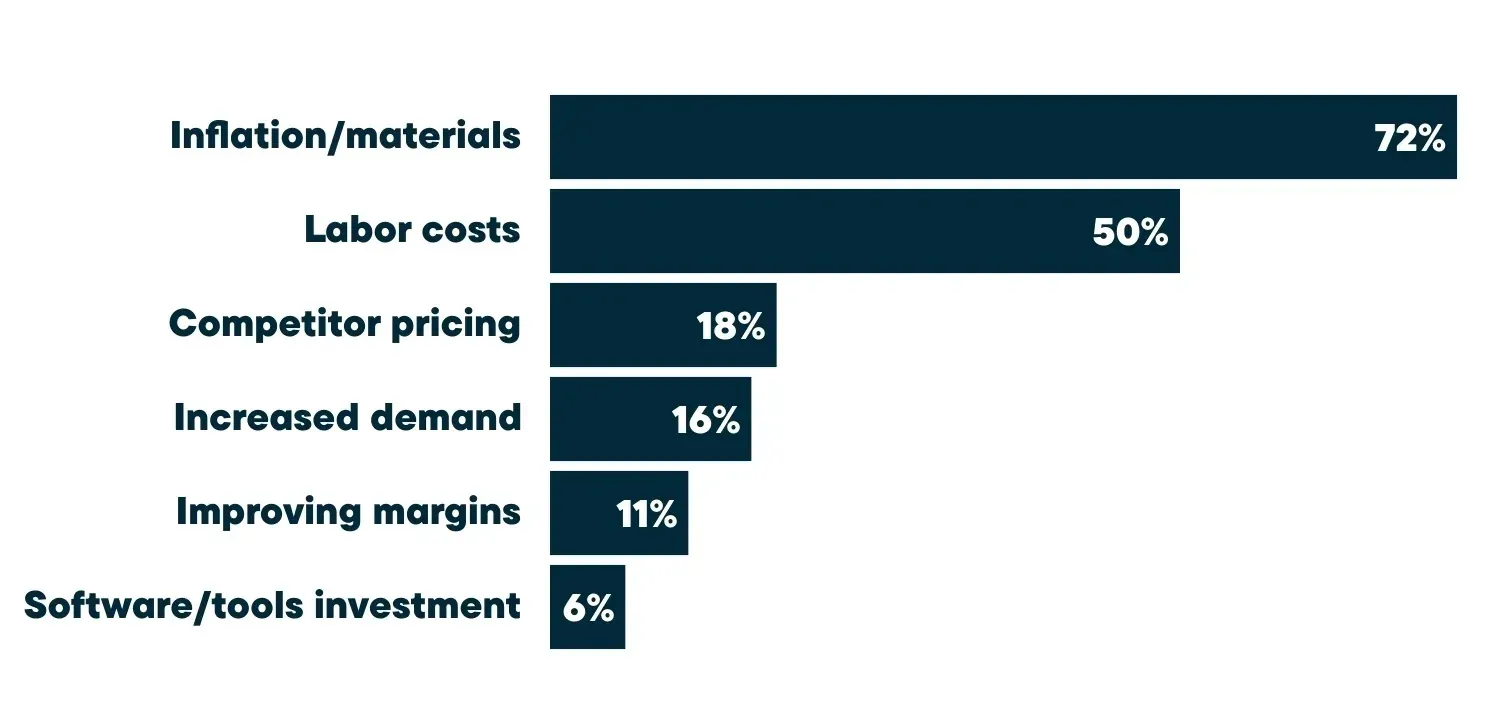 Figure 2: Inflation and materials, then labor, explain most price increases, while demand, margin and software investment trail far behind. Source: Jobber, 2026 Home Service Trends Report, Feb 2026. Chart published by the source, captured 20 Oct 2026.
What reasons do contractors give for raising prices?
The top reason is cost. The better-run shops also name margin and tools.
- 72% of businesses that raised prices cited inflation and material costs (Jobber, Feb 2026).
- 50% cited labor costs (Jobber, Feb 2026).
- 18% cited competitor pricing (Jobber, Feb 2026).
- 16% cited increased demand (Jobber, Feb 2026).
- 11% cited improving margins (Jobber, Feb 2026).
- 6% cited investment in software or tools (Jobber, Feb 2026).
- Over a third of strategic pricing leaders raised prices to improve profitability (Jobber, Feb 2026).
- 15% of strategic pricing leaders raised prices to pay for better tools and software (Jobber, Feb 2026).
Which risks worry residential contractors most?
Labor sits next to materials at the top of the list.
- 53% of residential contractors list the skilled labor shortage as a top business risk in 2026 (ACHR News, Apr 2026).
- 48% list increased material prices (ACHR News, Apr 2026).
- 54% are raising wages by 1% to 3% (ACHR News, Apr 2026).
- A net 28% of small business owners reported raising compensation in September (NFIB, Sep 2026).
How much did equipment makers raise prices in 2026?
Most announced increases landed in the single digits, and the big brands moved together in August.
- Daikin announced up to 7% on ductless, VRV and light commercial equipment, effective August 3 (ACHR News, Aug 2026).
- Goodman announced up to 7%, effective August 3 (ACHR News, Aug 2026).
- Amana announced up to 7%, effective August 3 (ACHR News, Aug 2026).
- Bard Manufacturing announced an average of 6%, effective August 3 (ACHR News, Aug 2026).
- Fujitsu announced 7%, effective July 6 (ACHR News, Jul 2026).
- Advanced Distributor Products announced up to 3% on copper air handlers and up to 5% on copper evaporator coils, effective July 5 (ACHR News, Jul 2026).
How much did parts and materials move?
Metals, valves and chemical products moved the most, and one line went down.
- Omnimax announced up to 15% on aluminum products and 12% on copper products, effective April 13 (ACHR News, Apr 2026).
- NDL announced 5% on ACR and PAC copper fittings, effective April 2 (ACHR News, Apr 2026).
- Sporlan announced 4%, effective May 1 (ACHR News, May 2026).
- Nu-Calgon announced 15% on specific glycol products, effective May 6 (ACHR News, May 2026).
- JB Industries announced 7.5% on brass access valves, capillary tubing and fittings, effective July 1 (ACHR News, Jul 2026).
- Duravent announced 7% across its portfolio, effective July 1 (ACHR News, Jul 2026).
- Legend Valve announced 3% to 25% depending on category, effective August 1 (ACHR News, Aug 2026).
- VTS American cut prices 15% on three modular air handling platforms in April (ACHR News, Apr 2026).
What did pricing do for an equipment maker?
Lennox shows price and mix offsetting weaker volume.
- Lennox reported a $24 million mix and price benefit in its Home Comfort Solutions segment in the second quarter of 2026 (Lennox, Jul 2026).
- The company as a whole booked a $39 million mix and price benefit in the same quarter (Lennox, Jul 2026).
What do inflation and tariffs add?
Services cost more to run, and energy is the loudest line item for the customers you quote.
- Prices for services less energy services rose 3.1% in the 12 months to September 2026 (Bureau of Labor Statistics, Oct 2026).
- Household energy prices rose 6.2% over the same 12 months (Bureau of Labor Statistics, Oct 2026).
- Electricity prices rose 4.4% (Bureau of Labor Statistics, Oct 2026).
- Piped gas service prices rose 5.0% (Bureau of Labor Statistics, Oct 2026).
- 40% of service firms that import inputs said they paid tariffs directly in the past 12 months (Federal Reserve Bank of New York, Jul 2026).
- Roughly 30% of tariff-paying service providers had fully passed those costs on to customers (Federal Reserve Bank of New York, Jul 2026).
- 47% of tariff-paying service firms expected more tariff-driven price increases (Federal Reserve Bank of New York, Jul 2026).
- 34% of services firms in the Small Business Credit Survey named tariff costs as a financial challenge, and more than 80% of firms in every sector named general cost increases (Federal Reserve Bank of New York, Jul 2026).
Can small firms pass every cost on?
Not fully. Services firms pass on less than they did in the last inflation spike.
- A net 60% of Tenth District services firms reported higher input costs than a year earlier in July 2025 (Federal Reserve Bank of Kansas City, Aug 2025).
- 53% of services firms passed through less than 20% of their cost increases in February 2025 (Federal Reserve Bank of Kansas City, Aug 2025).
Which pricing models earn more?
In ACCA’s contractor study, flat rate service calls earned more net profit than other methods, and showing more options on a proposal also paid.
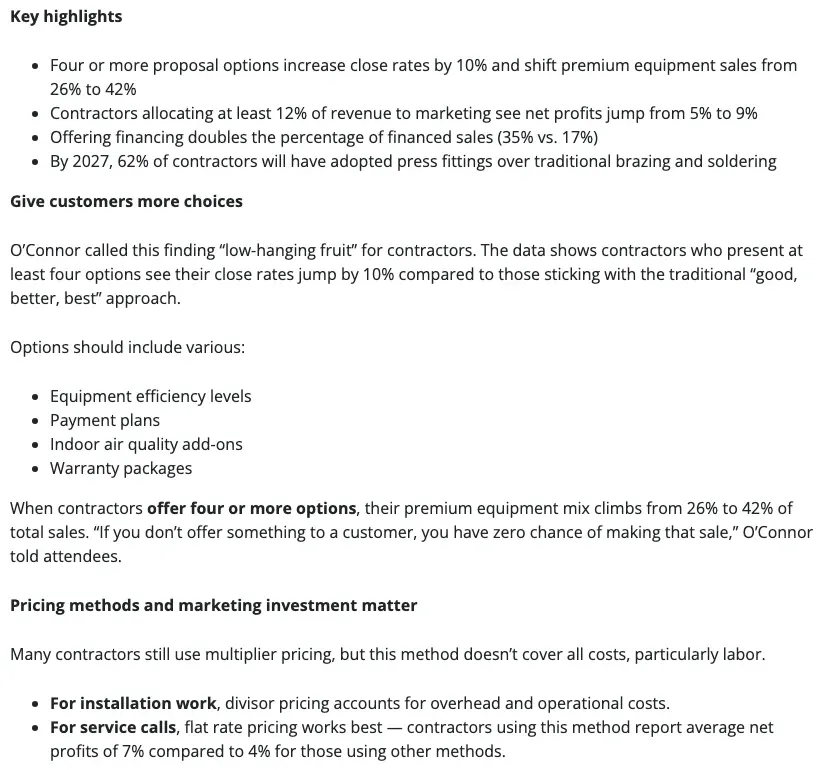 Figure 3: ACCA’s summary of its survey of more than 1,000 HVACR contractors ties flat rate service pricing and wider proposals to better profit and sales. Source: ACCA, Inside the Contractor of the Future Study, Dec 2025. Screenshot of the source page, captured 20 Oct 2026.
What does the study say about pricing methods and spend?
ACCA and Farmington Consulting Group surveyed more than 1,000 HVACR contractors. The full report is for members only, so these figures come from ACCA’s own summary and from trade press coverage of the same webinar.
- The average contractor spends 6% of annual revenue on marketing, and those who spend at least 12% report net profit of 9% against 5% (ACCA, Dec 2025).
- 56% of HVACR contractors have field service management software, and many use it mainly for invoicing (ACCA, Dec 2025).
- The average service ticket is $422 (ACHR News, Feb 2026).
- Residential contractors average $390 per ticket, and commercial contractors average $516 (ACHR News, Feb 2026).
How many options should a quote show?
Four or more, according to ACCA. Few shops do it.
- Contractors who offer four or more options close 52% of the time, against 42% when they offer one to three (ACHR News, Feb 2026).
- Premium equipment rises from 26% to 42% of sales when contractors offer four or more options (ACCA, Dec 2025).
- Only 31% of contractors in ServiceTitan’s residential survey present multiple pricing options (ACHR News, Apr 2026).
- 72% of contractors lead a proposal with the total price (ACHR News, Feb 2026).
- Contractors who lead with a monthly payment see 42% of new or replacement sales financed, against 21% when they lead with the total (ACHR News, Feb 2026).
- Leading with a monthly payment cuts the entry-level equipment mix to 34%, against 42% for the total price (ACHR News, Feb 2026).
- Only 28% of contractors lead with monthly payments (ACCA, Dec 2025).
- Contractors who never offer financing sell 50% base models, against 35% for those who always offer it (ACHR News, Feb 2026).
Do warranties and service plans change margin?
Yes. How you price the add-on changes what it earns.
- 58% of HVAC contractors offer extended labor warranties (ACHR News, Feb 2026).
- Contractors who include the warranty in the job price report a 30% margin on warranties, and 55% of contractors do so (ACHR News, Feb 2026).
- Contractors who sell the warranty as a separate add-on report a 24% margin, and about 45% do so (ACHR News, Feb 2026).
- 42% of HVAC customers surveyed already pay for a maintenance plan, and another 37% are interested in one (FIELDBOSS, Jul 2025).
- Repairs made up about 88% of HVAC jobs on Housecall Pro in the first quarter of 2026 (Housecall Pro, May 2026).
- The HVAC repair share of revenue on that platform grew from 21.6% in the fourth quarter of 2021 to 31.3% in the fourth quarter of 2025 (Housecall Pro, May 2026).
How sure are shops of their own prices?
Confidence follows size and age. HVAC owners sit above the average.
- 55% of home service pros say they are very confident in their pricing, 39% are somewhat confident and 5% are not very confident (Jobber, Feb 2026).
- 71% of HVAC pros and 71% of plumbers are very confident in their pricing (Jobber, Feb 2026).
- 69% of businesses earning $500,000 or more are very confident, and 67% of roofers are (Jobber, Feb 2026).
- Only 35% of starting businesses are very confident, and cleaning pros report the lowest confidence by trade at 48% (Jobber, Feb 2026).
- Jobber’s top-performing businesses reach a net profit benchmark of 20% to 40% (Jobber, Feb 2026).
What do customers expect from a quote?
They expect to see the price before the work, and they punish surprises. Cost is not their biggest worry, but a bill that grows is the most common specific complaint.
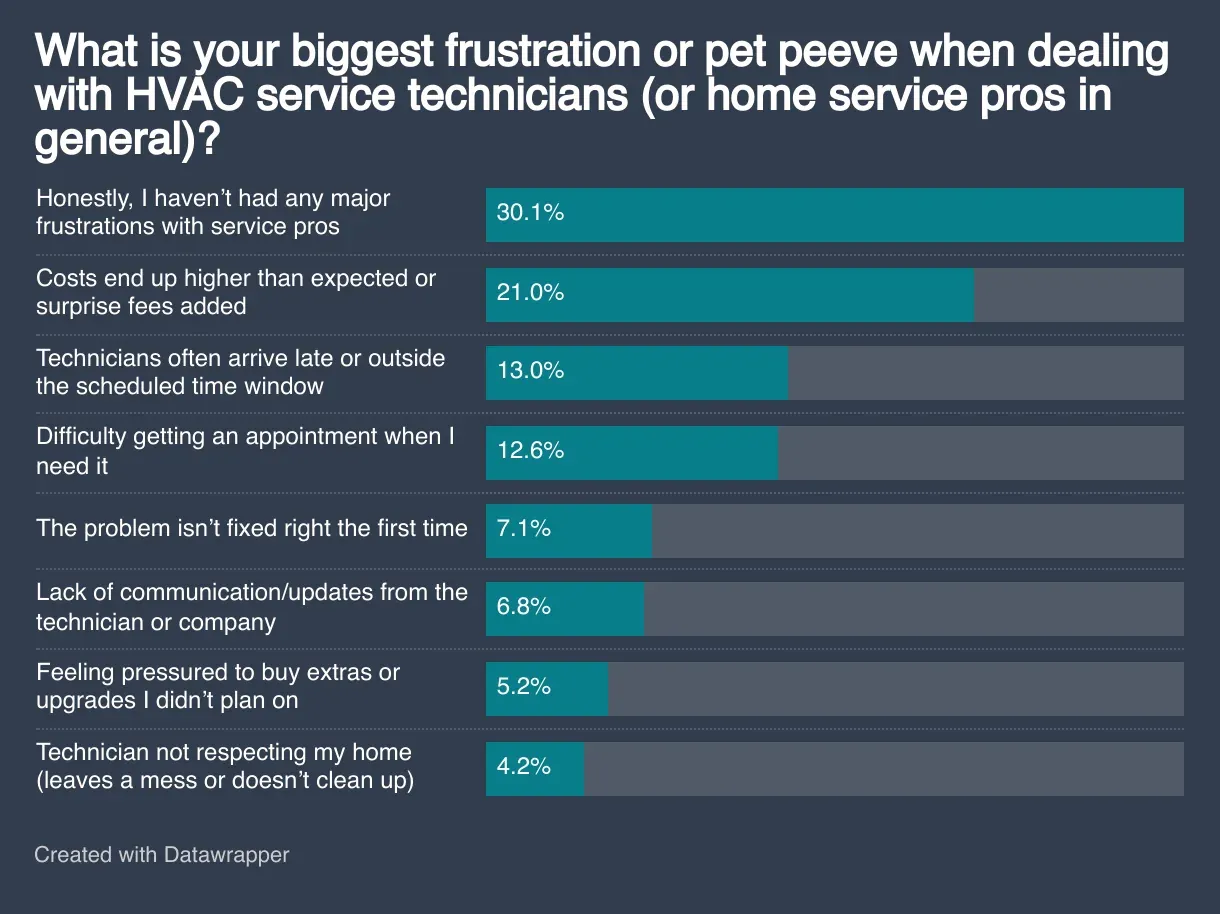 Figure 4: Costs that end up higher than expected are the most common specific complaint among HVAC customers, ahead of lateness and scheduling. Source: FIELDBOSS, HVAC Customer Preferences 2025 Survey, Jul 2025. Chart published by the source, captured 20 Oct 2026.
How much do HVAC customers worry about being overcharged?
Less than about breakdowns, but a surprise bill still stings. FIELDBOSS surveyed 1,000 US homeowners who had hired an HVAC pro in the past 12 months.
- 15.7% say a huge, unexpected repair or replacement bill is their top HVAC worry (FIELDBOSS, Jul 2025).
- 3.9% say their top worry is being overcharged or scammed (FIELDBOSS, Jul 2025).
- 84% completely or mostly trust their technician to be honest and not oversell (FIELDBOSS, Jul 2025).
- 94.9% were satisfied with their last HVAC service (FIELDBOSS, Jul 2025).
- 30.1% report no major frustration with service pros at all (FIELDBOSS, Jul 2025).
What else frustrates customers besides cost?
Process problems add up to more than price does.
- 13.0% name late arrival or missing the scheduled window (FIELDBOSS, Jul 2025).
- 12.6% name difficulty getting an appointment (FIELDBOSS, Jul 2025).
- 7.1% name a problem not fixed right the first time (FIELDBOSS, Jul 2025).
- 6.8% name a lack of updates from the technician or company (FIELDBOSS, Jul 2025).
- 5.2% feel pressured to buy extras they did not plan on (FIELDBOSS, Jul 2025).
How do customers want to pay?
Cards and monthly payments are replacing checks and lump sums.
- 50% of transactions in ServiceTitan’s residential survey are frictionless, meaning a card or financing (ACHR News, Apr 2026).
- Checks fell from 59% of home service payments in 2015 to 36% in 2024, according to Visa data quoted by ServiceTitan (ServiceTitan, Sep 2025).
- Contractors who offer financing see 12% higher close rates in ServiceTitan data (ServiceTitan, Sep 2025).
- Those contractors also see 13% higher average ticket sizes (ServiceTitan, Sep 2025).
- 63% of homeowners say they are likely to need financing for a home purchase or improvement within five years (Citizens, Apr 2026).
- 39% of homeowners say they do not understand how financing options work (Citizens, Apr 2026).
How often do projects end up over the estimate?
Often enough that customers expect it, and the gap grows with big jobs.
- 92% of homeowners who recently hired a pro finished their project at or above budget (Angi, Aug 2026).
- 43% went over their original estimate (Angi, Aug 2026).
- Slightly more than one third of those who went over budget spent at least 30% more than planned (Angi, Aug 2026).
- 59% of recent homeowners say cheaper materials would make them more likely to act (Angi, Aug 2026).
- 54% say lower inflation would make them more likely to act (Angi, Aug 2026).
- Homeowners estimate lifetime maintenance and repair costs at $70,000, while Synchrony puts the actual figure above $339,000 (Synchrony, Mar 2026).
- Many homeowners expect to spend $1,000 to $5,000 a year, while actual repair and maintenance costs average more than $7,000 a year (Synchrony, Mar 2026).
How often do quotes turn into jobs?
Most pros win more than half of their quotes, and the winners are the ones who have done it before. Jobber warns that closing nearly every quote can mean prices are too low.
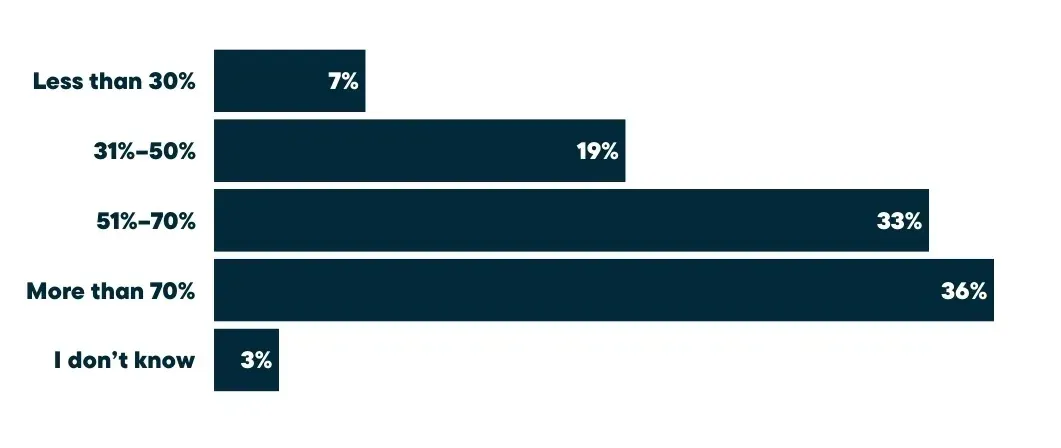 Figure 5: Two thirds of surveyed home service businesses win more than half of what they quote, and a small group wins under three in ten. Source: Jobber, 2026 Home Service Trends Report, Feb 2026. Chart published by the source, captured 20 Oct 2026.
What share of quotes win?
Win rates rise with experience and with urgent work.
- 36% of pros win more than 70% of their quotes (Jobber, Feb 2026).
- 33% win between 51% and 70% (Jobber, Feb 2026).
- 19% win between 31% and 50% (Jobber, Feb 2026).
- 7% win under 30%, and 3% do not know their rate (Jobber, Feb 2026).
- 60% of established businesses close more than half their quotes (Jobber, Feb 2026).
- 21% of starting businesses win under 30% of quotes, and many do not track it (Jobber, Feb 2026).
- Jobber’s top-performing businesses win over 60% of their quotes (Jobber, Feb 2026).
- Plumbing, roofing and electrical pros report the highest close rates, likely because the work is urgent (Jobber, Feb 2026).
What do HVAC installs close at?
Under half. Installs are big purchases, and buyers compare.
- Contractors close 43% of their install jobs on average (ACHR News, Feb 2026).
- Residential contractors close 45% and commercial contractors close 38% (ACHR News, Feb 2026).
- 15% of competitors win the lead when a contractor waits one or two days to respond (ACHR News, Apr 2026).
Does financing move the close rate?
Each source here that measured it points the same way, and many customers do not ask.
- 68% of contractors have financing available, but only 37% offer it on every job (ACHR News, Feb 2026).
- 79% of residential contractors offer financing, against 49% of commercial contractors (ACHR News, Feb 2026).
- Contractors who offer financing on every job finance 35% of their sales, against 17% for those who offer it selectively (ACCA, Dec 2025).
- Close rates rise 11% when financing is offered (ACCA, Dec 2025).
- 62% of homeowners are more likely to move forward when payment plans are offered (Housecall Pro, May 2026).
- Only 25% of homeowners ask about financing when an estimate is higher than expected (Housecall Pro, May 2026).
- 3 in 4 homeowners know contractor financing exists, but only 1 in 3 has used it (Synchrony, Mar 2026).
How much will customers pay?
More than the cheapest bid when the need is urgent, and less than they planned when it is not. Budgets are holding, but timing is slipping.
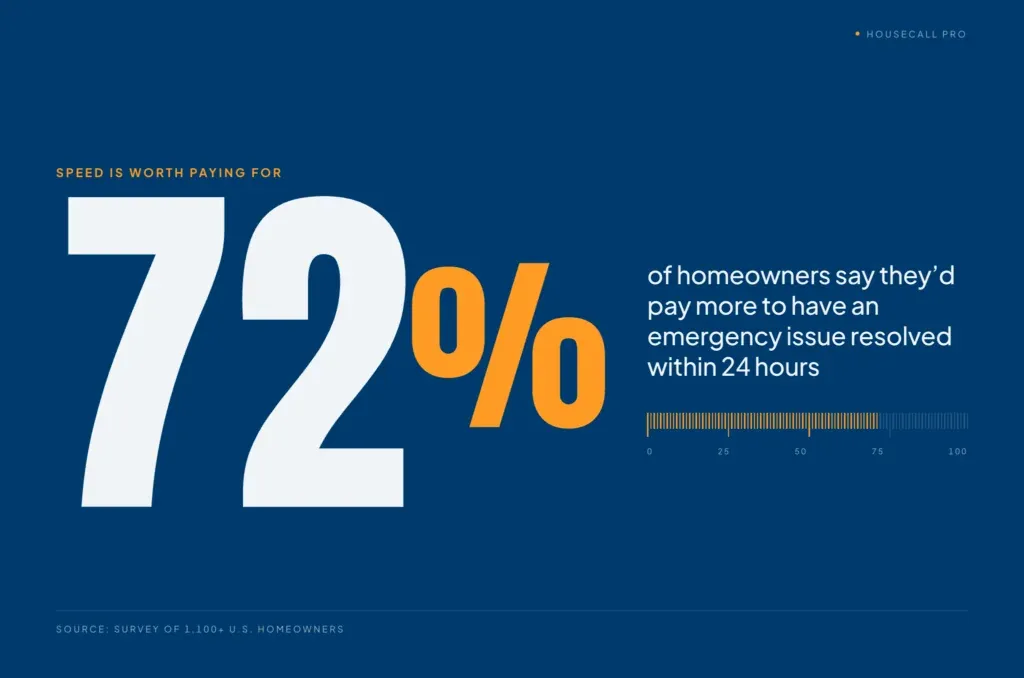 Figure 6: Speed is the one thing most homeowners will pay extra for, which is why response time can protect margin on urgent jobs. Source: Housecall Pro, The State of Home Service Spending, May 2026. Chart published by the source, captured 20 Oct 2026.
Will customers pay more for speed?
Yes, and the premium is accepted by a large majority.
- 29% of homeowners would pay much more for an emergency fixed within 24 hours (Housecall Pro, May 2026).
- 42% would pay somewhat more (Housecall Pro, May 2026).
- 19% expect standard pricing no matter how urgent the job (Housecall Pro, May 2026).
- 73.8% of HVAC customers expect service within 24 hours when the system stops (FIELDBOSS, Jul 2025).
- 29.8% expect it within a few hours (FIELDBOSS, Jul 2025).
- 58% of homeowners contact a pro because of a sudden problem, 51% because a smaller issue got worse and 47% for routine maintenance (Housecall Pro, May 2026).
How much are homeowners budgeting?
Most plan to spend, and the DIY line sits near $500.
- 96% of homeowners plan to spend on home projects in 2026 (Housecall Pro, May 2026).
- 59% spent more than $3,000 on home projects in 2025, and 56% expect to this year (Housecall Pro, May 2026).
- 33% expect to spend more than $7,500 (Housecall Pro, May 2026).
- 57% would hire a pro for a job they might otherwise do themselves once it reaches $500 (Housecall Pro, May 2026).
- 75% would hire a pro at $1,000 or more (Housecall Pro, May 2026).
- 71% of homeowners plan a home improvement project within two years (Citizens, Apr 2026).
- 64% are focused on necessary repairs or replacements, and 17% on indulgent upgrades (Citizens, Apr 2026).
- 30% are turning to DIY projects over hiring outside help (Citizens, Apr 2026).
- 66% of homeowners say they would give up other major purchases to fund a home project (Citizens, Apr 2026).
- 58% of recent pro-hirers completed a repair in the past month and 63% completed maintenance (Angi, Aug 2026).
- 23% of homeowners who delayed a project cited an unplanned or emergency project as the reason (Angi, Aug 2026).
Can households absorb a surprise repair bill?
Many cannot, which is why they delay and why they compare.
- 77% of homeowners are delaying or reducing the scope of projects because of rising costs (Housecall Pro, May 2026).
- 41% have delayed a repair that ended up costing more later (Housecall Pro, May 2026).
- 26.1% of HVAC customers have put off a service call because of cost (FIELDBOSS, Jul 2025).
- 22.9% have put one off because it was inconvenient or they were too busy (FIELDBOSS, Jul 2025).
- 75% of homeowners have had an emergency home repair, and 40% of those cost more than $3,000 (Synchrony, Mar 2026).
- The US repair and remodeling market tops $600 billion, nearly 50% above pre-pandemic levels (Synchrony, Mar 2026).
- 58% of US adults say price changes over the past year made their financial situation worse (Federal Reserve, May 2026).
- 63% of adults would cover a $400 emergency expense with cash or its equivalent (Federal Reserve, May 2026).
- 59% of adults had at least one major, unexpected expense in the past 12 months (Federal Reserve, May 2026).
Methodology and Sources
We chose each figure by asking who produced it first and went to that source: government releases and Federal Reserve research, company filings and releases, and surveys run by the group that reports them. Several contractor surveys come from software firms and trade groups, so they describe their members and respondents and may not represent every shop. Where a full report is gated, as with ACCA’s Contractor of the Future study and ServiceTitan’s 2026 Residential State of the Trades, we cite the public summary or the trade press report of the same findings and say so. Online homeowner surveys are non-probability samples and are best read as direction, not exact counts. Equipment price figures are manufacturer announcements as listed by ACHR News, not what any shop paid. We refresh this page monthly.
Sources
- ACCA, Inside the Contractor of the Future Study
- ACHR News, HVAC Price Increase List: April 2026
- ACHR News, HVAC Price Increase List: August 2026
- ACHR News, HVAC Price Increase List: July 2026
- ACHR News, HVAC Price Increase List: May 2026
- ACHR News, Survey Reveals Strategies to Boost HVAC Close Rates (ACCA Contractor of the Future)
- ACHR News, Survey: 25% of Residential Contractors Using AI to Boost Business (ServiceTitan 2026 Residential State of the Trades)
- Angi, 2026 State of Home Spending Pulse
- Bureau of Labor Statistics, Consumer Price Index, September 2026
- Citizens, Dream House Reality Report
- FIELDBOSS, HVAC Customer Preferences 2025 Survey
- Federal Reserve Bank of Kansas City, Amid Rising Input Costs, Many Tenth District Firms Report Passing Along Fewer Costs to Customers
- Federal Reserve Bank of New York, Effect of Tariffs on U.S. Small Businesses
- Federal Reserve Bank of New York, More Tariff Pass-Through Is in the Pipeline
- Federal Reserve, Economic Well-Being of U.S. Households in 2025
- Housecall Pro, The State of Home Service Spending (PDF)
- Housecall Pro, The State of Home Service Spending (web page)
- Jobber, 2026 Home Service Trends Report
- Jobber, Home Service Economic Report, 2025 Review and 2026 Outlook
- Jobber, Home Service Economic Report, Q2 2026
- Lennox, 2026 Second Quarter Results
- NFIB, Small Business Economic Trends, August 2026
- NFIB, Small Business Economic Trends, September 2026
- ServiceTitan, 2025 Consumer Trends in the Trades Report
- Synchrony, Lifetime of Home Care study